Ethics that work: EU4PFM is advancing the Code of Conduct at the State Customs Service of Ukraine
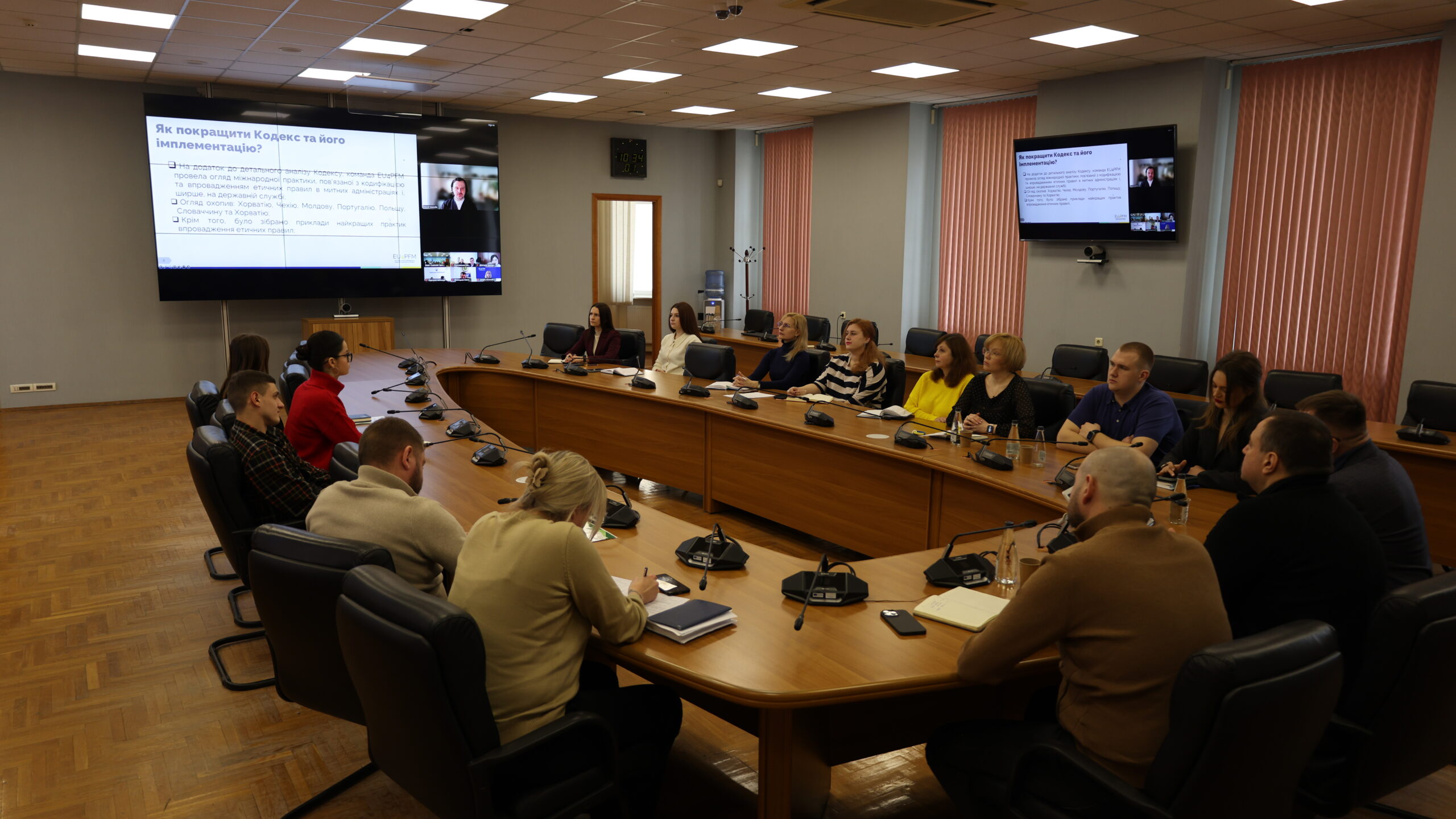
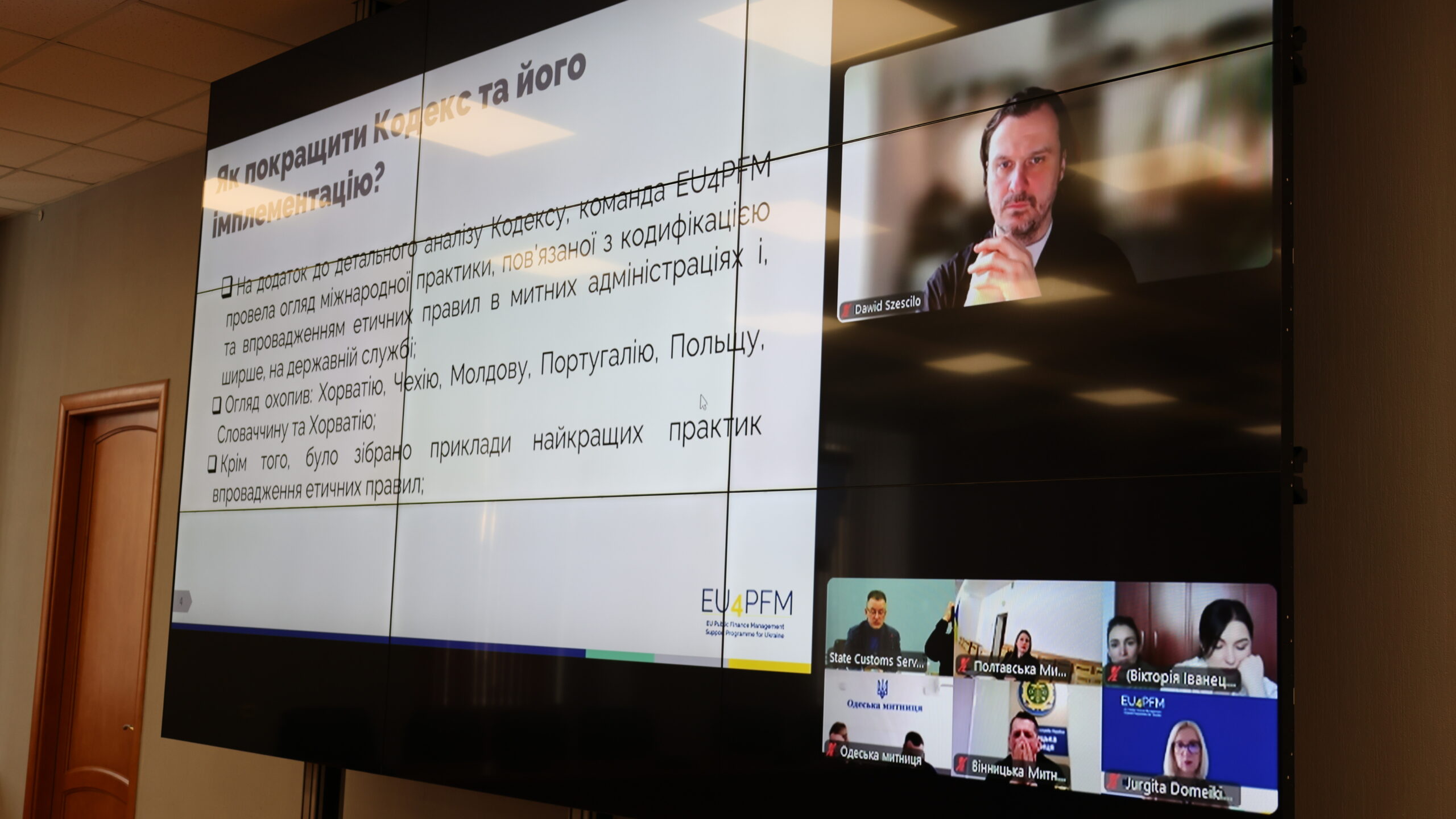
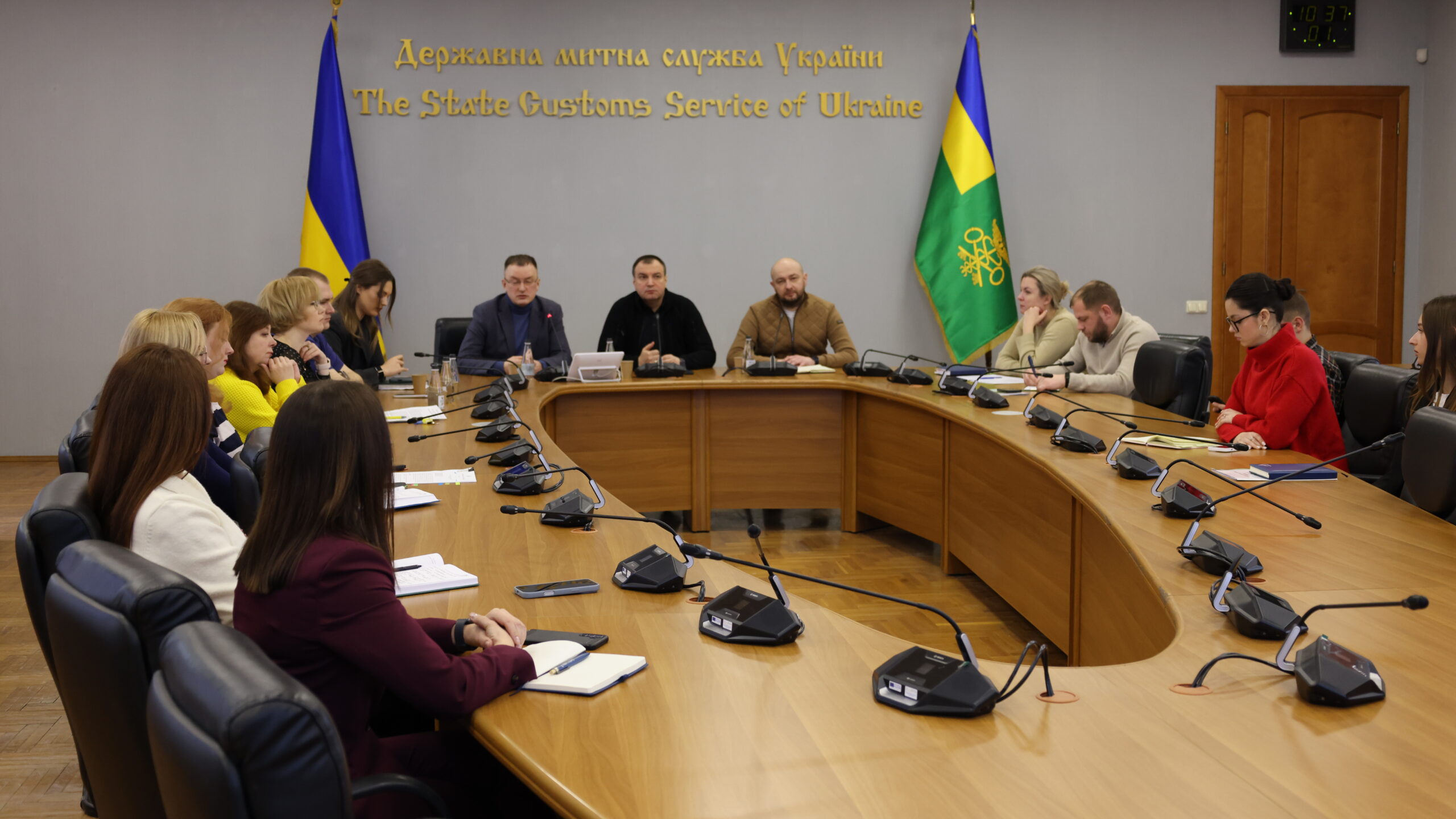
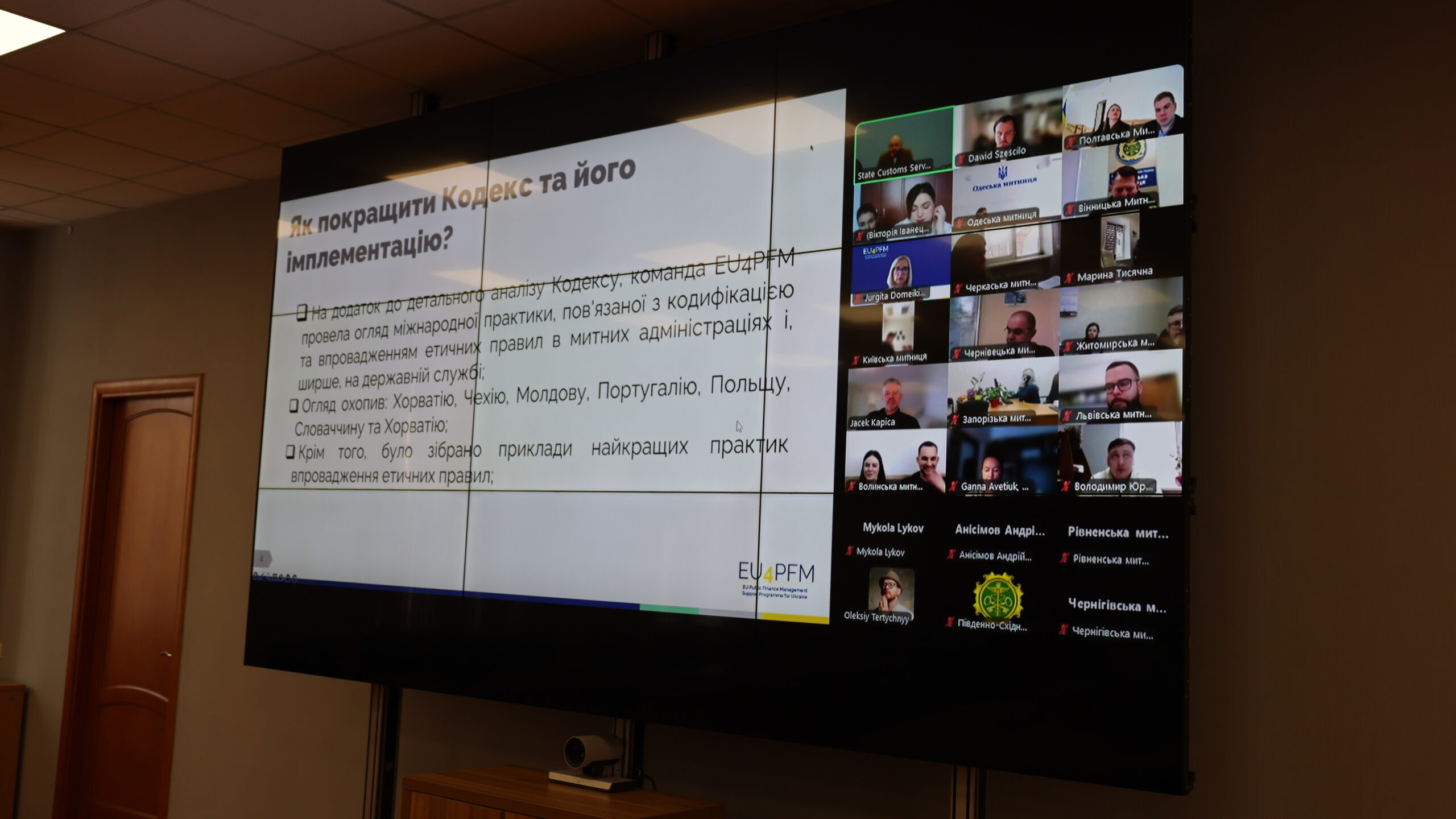
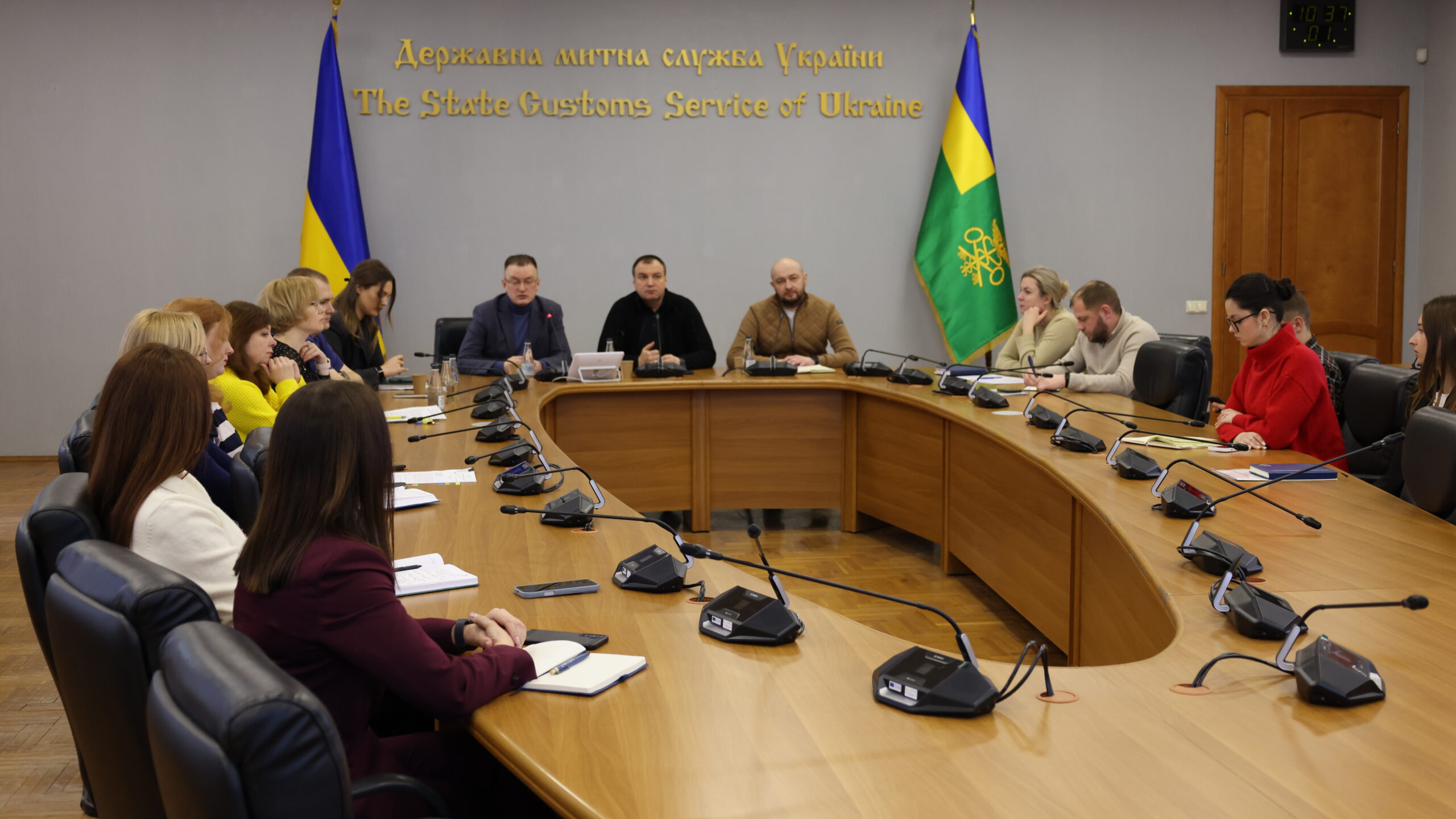
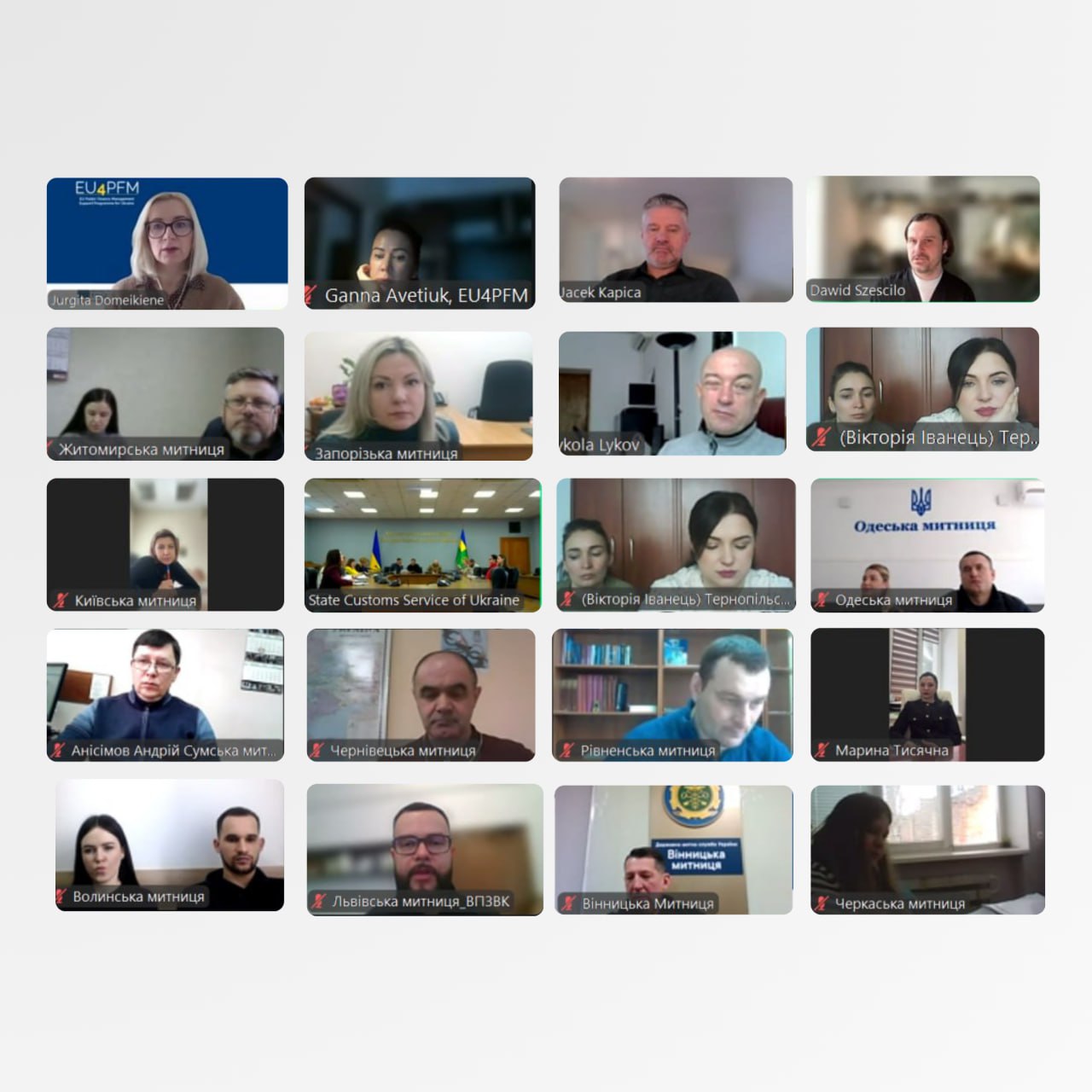
At the request of the State Customs Service of Ukraine, EU4PFM delivered a presentation dedicated to reviewing the Code of Ethics and exploring how it can work more effectively in practice. The presentation was delivered by EU4PFM international experts Jacek Kapica and David Szescilo, who shared European experience and practical approaches to strengthening integrity frameworks in customs administrations. The discussion brought together representatives of all regional offices, as well as the Headquarters’ Anti-Corruption and HRM Departments, ensuring broad institutional engagement.
A Code of Ethics is more than a formal document — it sets the tone for how an institution makes decisions, exercises authority and serves society. This approach is fully in line with the standards of the World Customs Organization under the Revised Arusha Declaration, where a code of conduct is recognised as one of the key pillars of integrity.
While the current Code, adopted in 2021, provides a solid foundation, the discussion focused on how to make it clearer, more structured and easier to use in everyday work. The review highlighted the importance of defining a concise set of core ethical principles and building the document around them. It also addressed the need to clearly separate values from liability provisions, avoid duplication of existing legislation, and provide practical guidance on issues such as effective dissemination and media communication.
As noted by Jurgita Domeikiene, EU4PFM Team Lead: “A code of ethics should be a living document. It must clearly express core values and, at the same time, help officials navigate complex situations in their daily work. Only then does it truly support integrity and strengthen public trust.”
To broaden the perspective, EU4PFM presented comparative experience from customs administrations and codes of ethics of Croatia, the Czech Republic, Portugal, Poland and Slovakia. These examples show that the most effective codes are often concise and principle-based — but what truly makes them work is the supporting ethical infrastructure: advisors, clear guidelines, regular training and open discussion of ethical dilemmas.
Strengthening ethics is about culture. It is about creating an environment where officials feel confident to make the right decisions, even in complex situations. EU4PFM remains committed to supporting the SCS in this process, so that the Code of Ethics is not just a document on paper, but a practical compass guiding everyday professional conduct.