European experience for the new Customs Code of Ukraine
The III Customs Platform has concluded, but we continue to reflect on Ukraine’s new Customs Code and the changes it will bring.
EU4PFM international experts provide ongoing methodological support to their Ukrainian counterparts throughout the development and adoption of Ukraine’s new Customs Code, whose provisions are closely aligned with EU customs legislation. An important part of this support is sharing the practical experience of EU Member States and how EU customs rules are applied in practice.
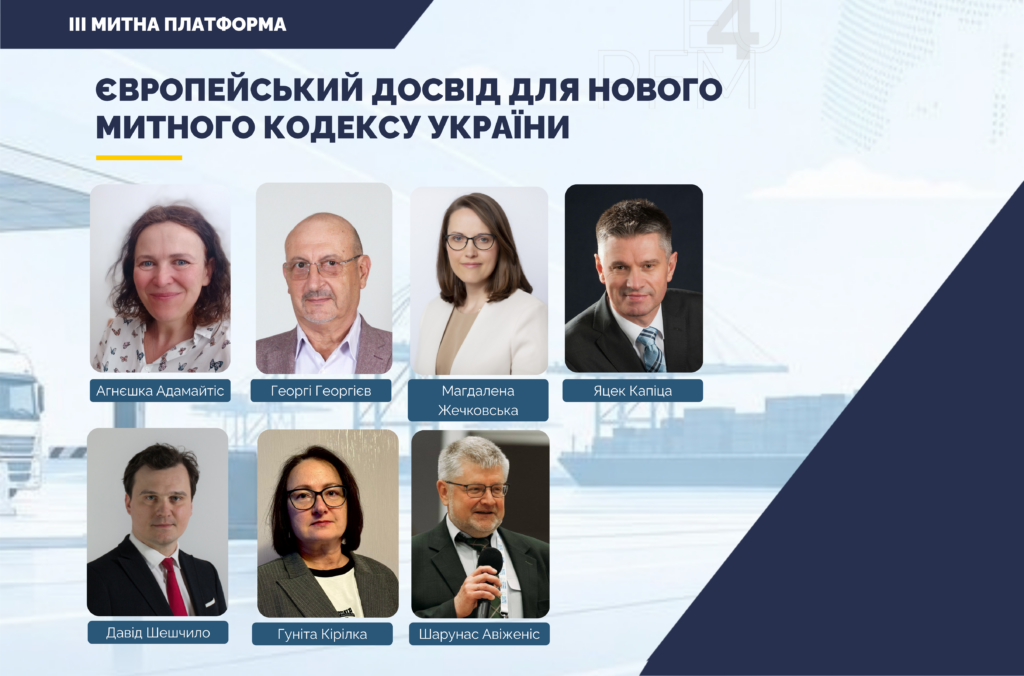
During Strategic Session 2 of the III Customs Platform, EU4PFM experts presented how different provisions of EU customs legislation are implemented in practice and what are the approaches taken by Member States:
- Agnieszka Adamaitis – customs representation and the approaches set out in the Union Customs Code and how they are implemented in the national legislation of EU Member States;
- Georgi Georgiev – intellectual property rights protection, inter-agency cooperation, and the role of digital tools in the practical implementation of relevant mechanisms;
- Magdalena Rzeczkowska – release of goods, selection for customs controls, and the preparation of relevant documentation, drawing on Poland’s practical experience;
- Dawid Sześciło and Jacek Kapica – the organisation of customs administrations across EU Member States, national approaches to their governance, the status and powers of customs officials, as well as integrity, anti-corruption and compliance mechanisms;
- Gunita Kirilka – customs debt under the Union Customs Code, its types, the circumstances in which it is incurred, liability for payment, and mechanisms for its discharge;
- Šarūnas Avižienis – the scope of flexibility available to Member States in the practical application of EU customs legislation and the possibilities for national regulation in areas that remain within national competence.
Watch the full video of Strategic Session 2, “Practical Experience of EU Member States”.