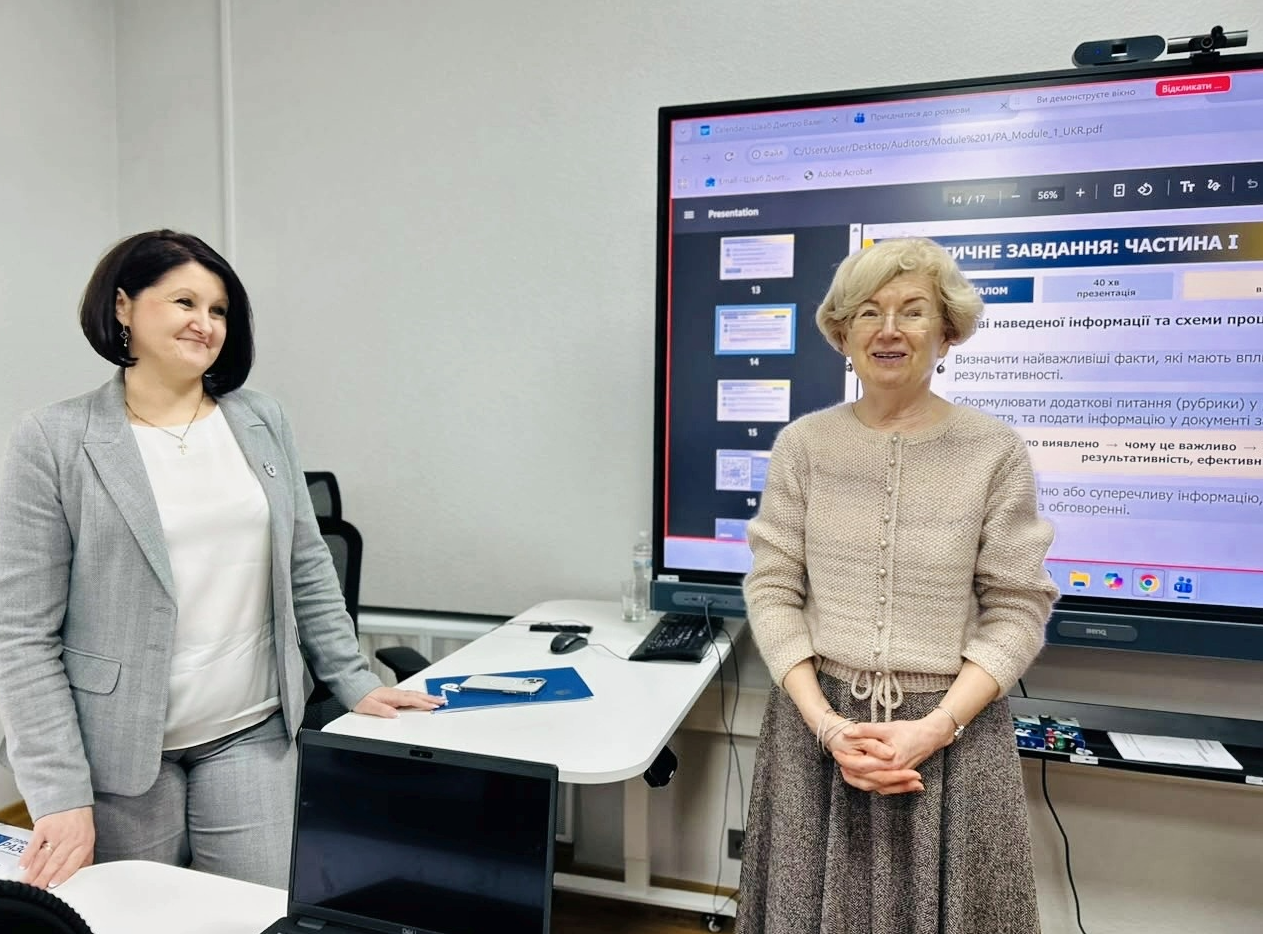
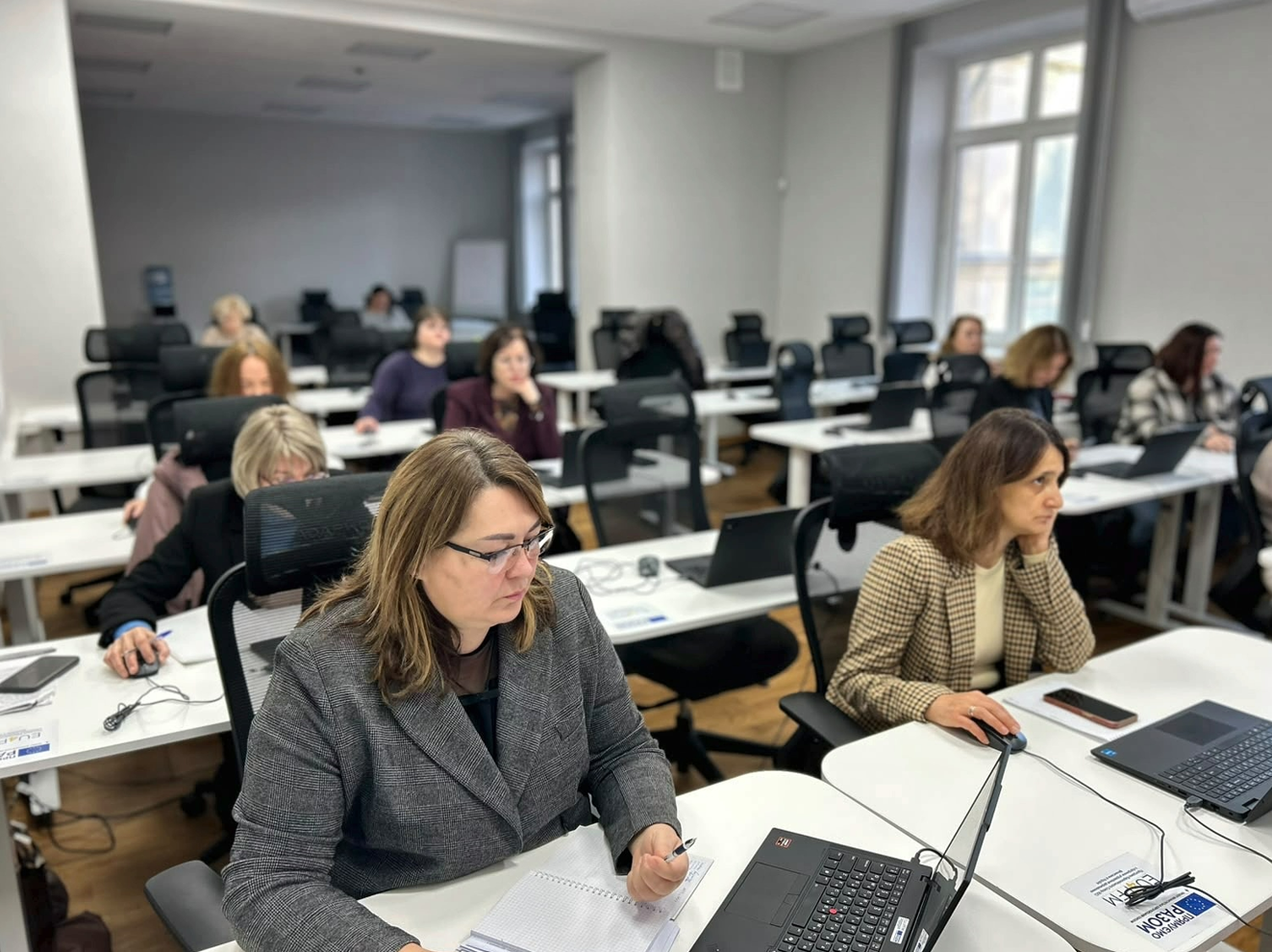
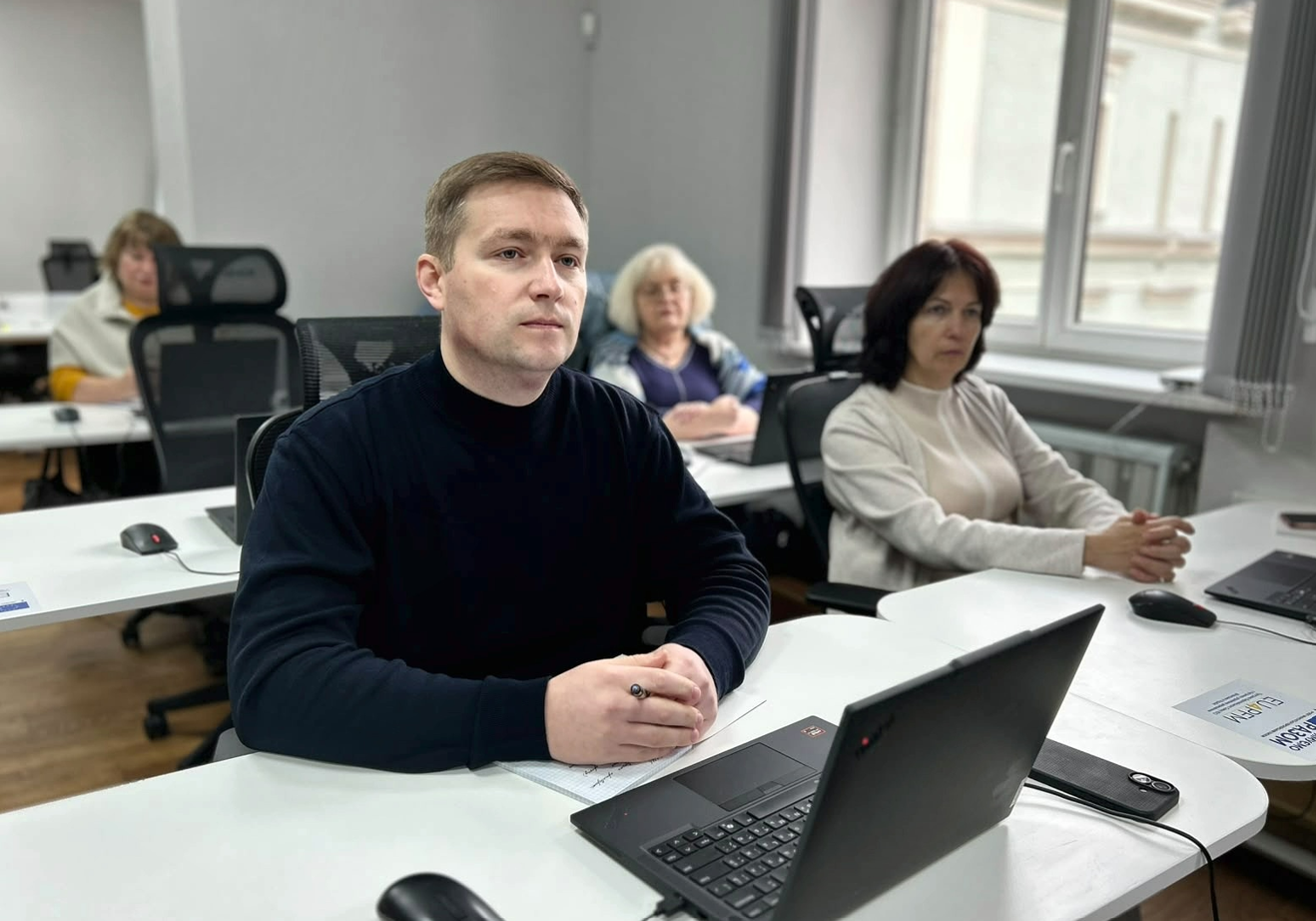
Performance audit training at the Accounting Chamber of Ukraine is moving into its next stage
Throughout October, participants have been working through the key stages of planning a performance audit, from understanding the subject matter and identifying potential problems to assessing risks and deciding how an audit should be conducted.
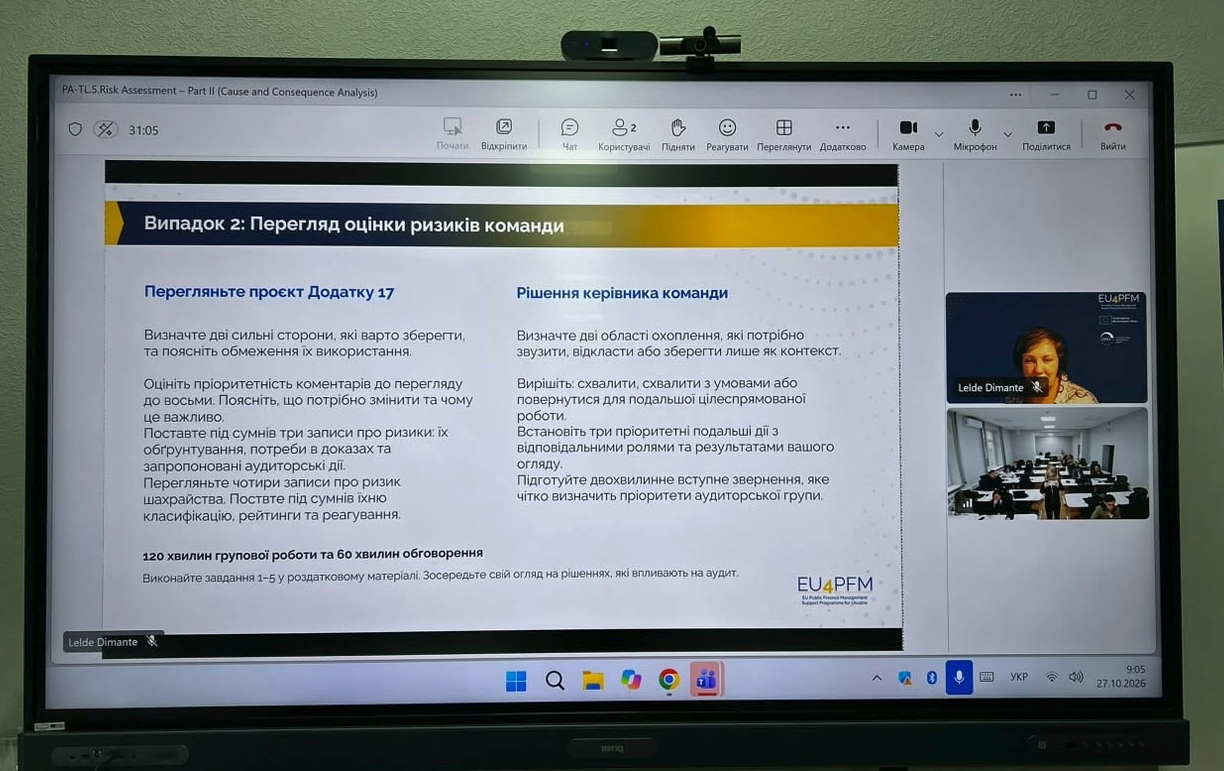
The training, organised with the support of EU4PFM, follows two complementary tracks. Auditors are developing their skills in formulating audit questions, identifying reliable sources of evidence and designing procedures that can provide meaningful answers. At the same time, audit team leaders are learning to critically assess the work of their teams, challenge assumptions and ensure that audit plans are realistic, focused and properly justified.
A common case study on humanitarian demining and the return of agricultural land to productive use brings these different stages together. Working through practical scenarios, participants explore how an initial assessment of risks shapes the entire audit process, from selecting priorities to determining what evidence is needed.
By the end of October, regional auditors had progressed to developing detailed audit procedures, while audit team leaders had begun working on the overall audit approach. Central Office auditors continued strengthening their risk assessment skills.
Beyond learning individual techniques, the programme helps build a consistent approach to performance auditing across the Accounting Chamber, where every audit question, procedure and conclusion is supported by clear professional reasoning.
Implemented under EU4PFM Component 5, the training contributes to strengthening the quality of public audit in Ukraine and the Accounting Chamber’s capacity to provide independent, evidence-based assessments of how public resources are managed and used.