Representatives of the State Customs Service of Ukraine Studied Polish Experience in Using X-Ray Systems at the Border During a Study Visit to Przemysl
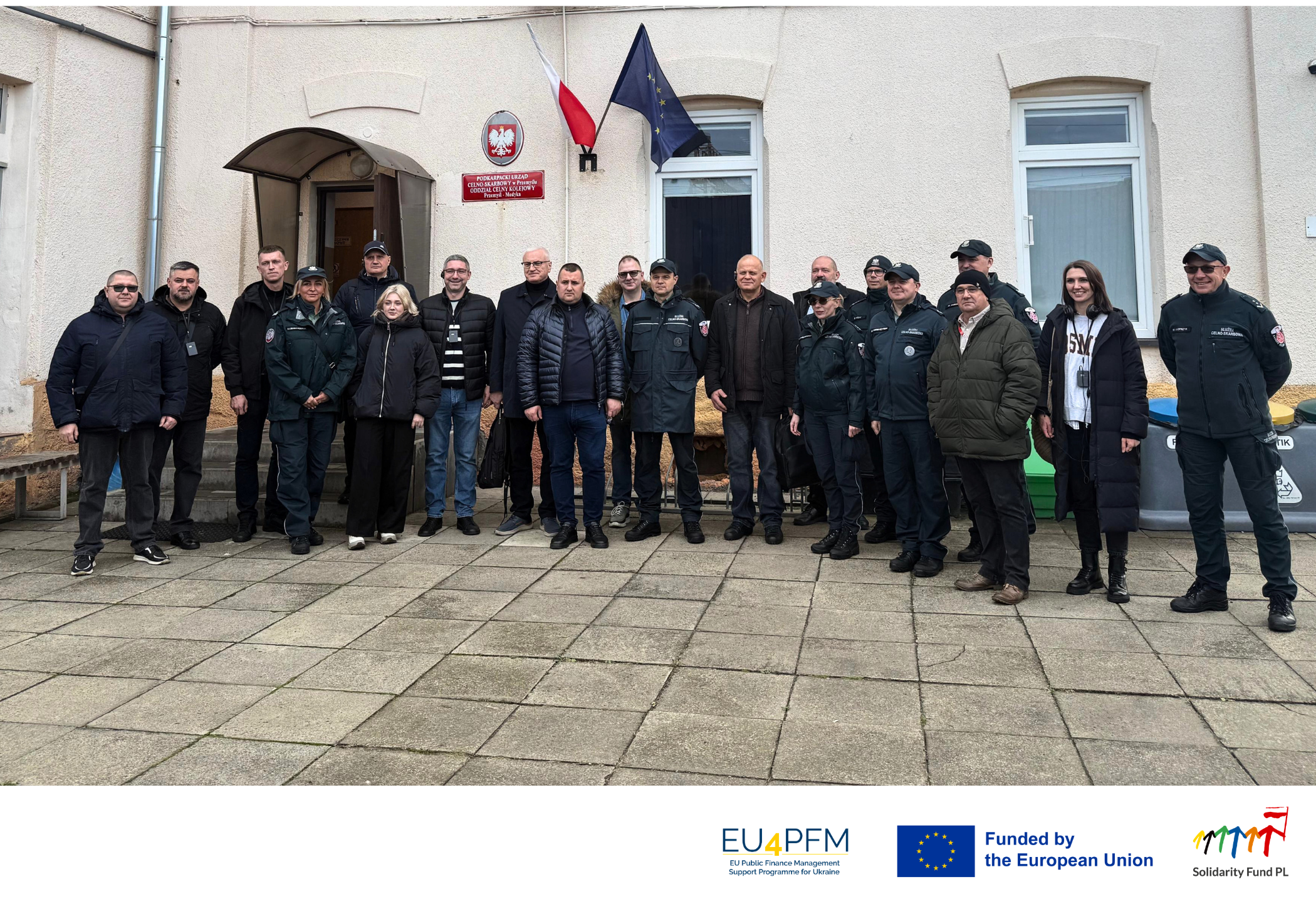
From November 16 to 20, 2026, a study visit for representatives of the State Customs Service of Ukraine (SCS) to the National Revenue Administration of the Republic of Poland took place in Przemysl, Poland.
The event was organised by the Representative Office of Solidarity Fund PL in Ukraine within the framework of Phase III of the EU Public Finance Management Support Programme for Ukraine (EU4PFM), funded by the European Union and implemented by CPVA, Expertise France, and Solidarity Fund PL in partnership with Ukrainian institutions.
The main topic of the visit was exchanging experience and best practices on the use and development of X-ray (RTG) systems to combat smuggling at state border crossing points, with a particular emphasis on rail transport.
The event brought together executives and specialists from the SCS central office, as well as representatives of the Lviv and Volyn Customs Offices, including the Yahodyn customs post. The visit was hosted by the Subcarpathian Customs and Tax Office in Przemysl and moderated by Slawomir Pichor, Key Customs Expert on Integrated Border Management (IBM) of the EU4PFM project.
The program combined expert discussions, comparative analysis, and hands-on familiarization with the operations of Polish border crossing points:
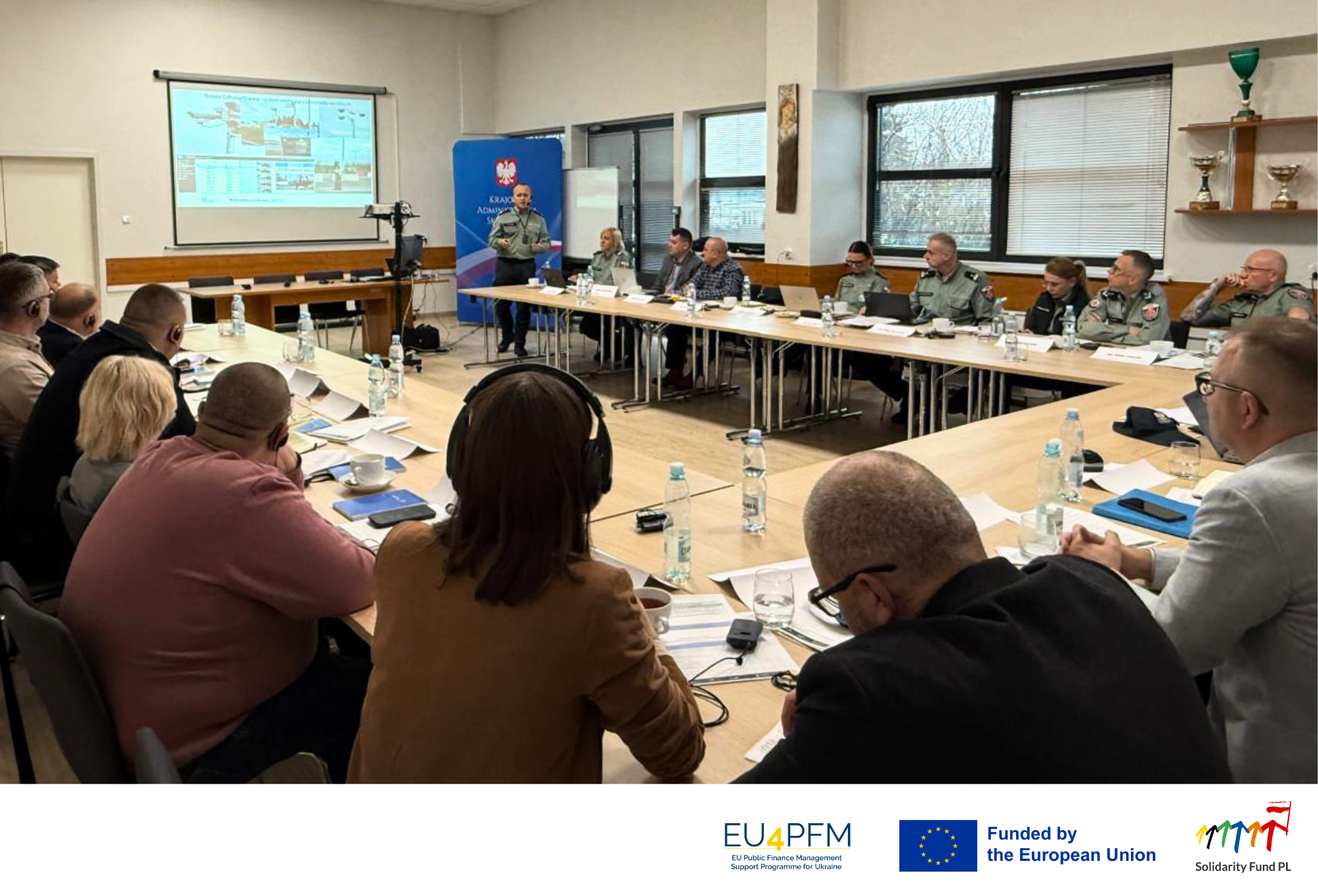
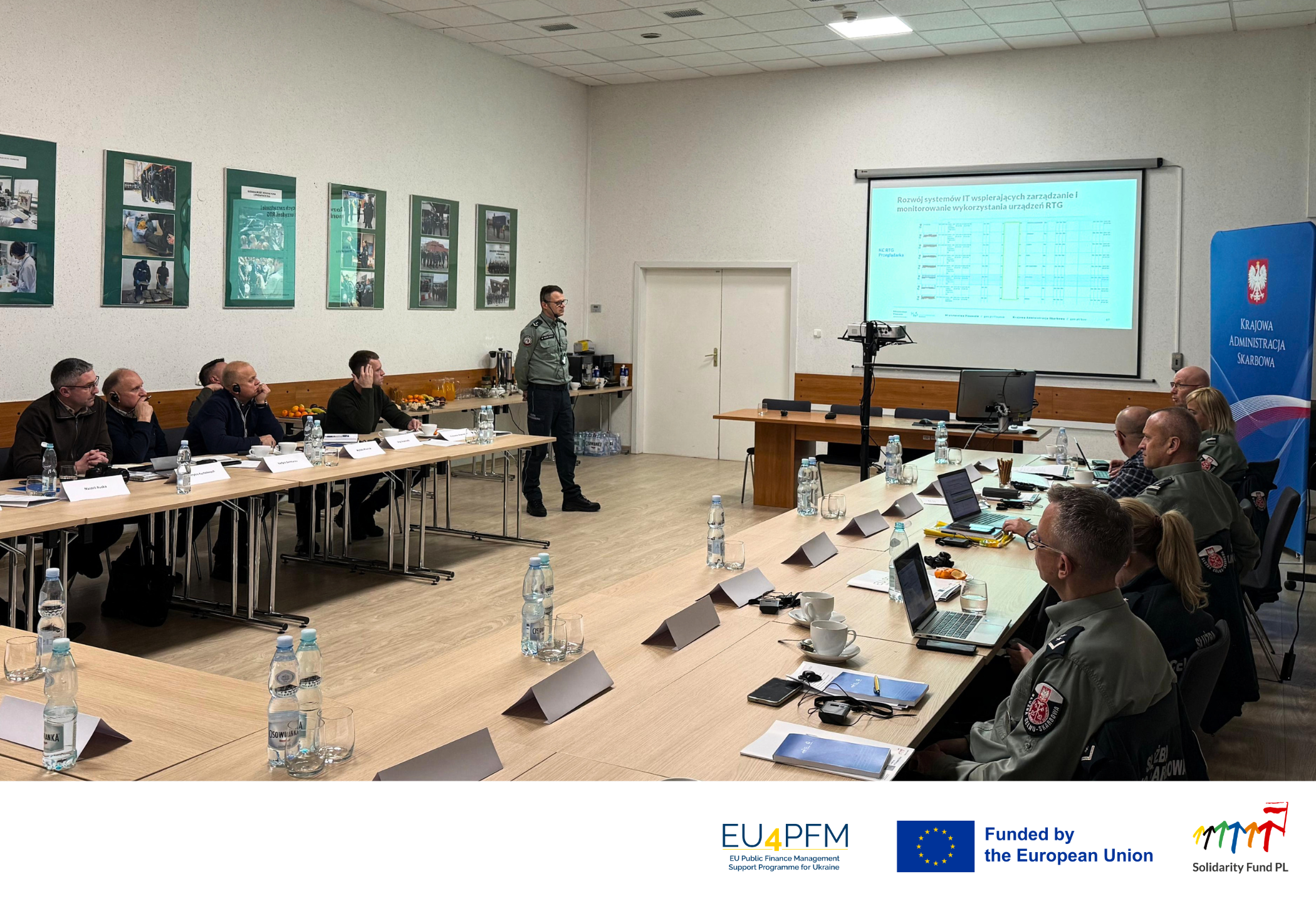
- Institutional and Technical Management Models: The Ukrainian delegation presented its strategy for developing customs RTG systems, while Polish colleagues introduced the concept of integrated X-ray equipment management, the development of specialized IT systems, operator training principles, and the operations of the RTG Competence Center within KAS.
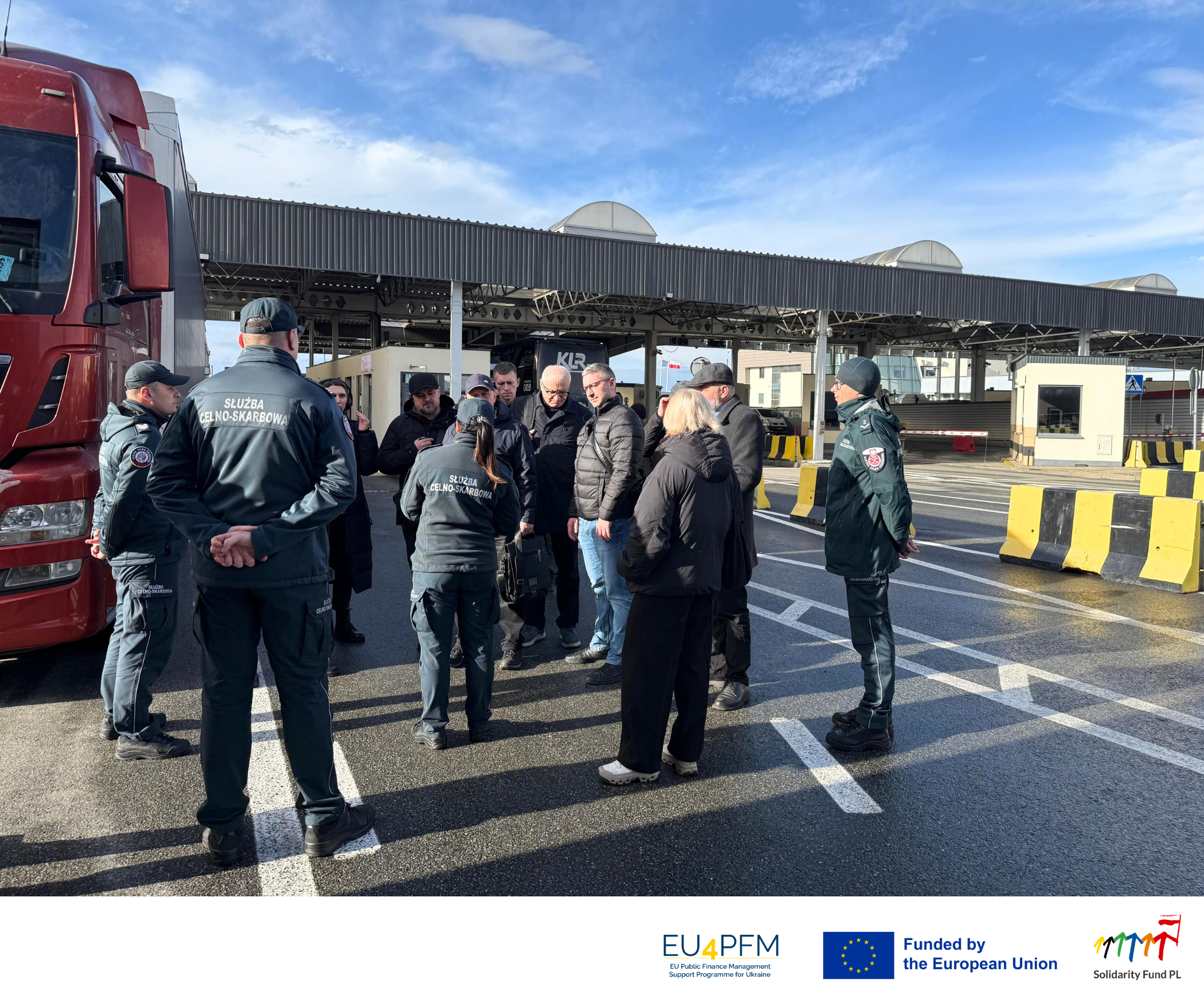
- Practical Field Session in Medyka: Participants visited the road and rail border crossing points in Medyka, where they examined the organization of scanning processes for oversized cargo (particularly on railways), operational procedures, radiation protection requirements, and the technical capabilities of modern non-intrusive inspection systems.
- Planning Next Steps: During the wrap-up sessions, the parties conducted a comparative analysis of X-ray control management systems in Poland and Ukraine in line with EU standards, identified the Ukrainian side’s needs, and agreed on priorities for further expert and training support under the project.
The organizational, technical, and procedural solutions acquired during the visit will contribute to improving non-intrusive inspection systems in Ukraine, more effectively combating smuggling, and facilitating legitimate trade across the Ukrainian-Polish border.
“This visit holds strong practical value for us, as Ukraine is preparing to introduce railway scanners at the Yahodyn and Mostyska II border crossing points. During the visit, we saw firsthand how our Polish colleagues organise the entire process—from receiving data on wagons and cargo to analysing images and inspecting detected anomalies. Particularly valuable are their best practices in cooperation between customs, railway operators, and the border guard service, as well as operator training and centralised expert support. It is important to take these approaches into account as we prepare Ukrainian systems for operation,” emphasised Dmytro Kuzhelevych, Deputy Director of the Department – Head of the Division of Technical Systems of Customs Control, Department of Material and Technical Support and State Property Management of the State Customs Service of Ukraine.
As Sławomir Pichor, EU4PFM Key Customs Expert on Integrated Border Management (IBM) and moderator of the study visit, rightly emphasised, effective customs controls must ensure security without creating unnecessary obstacles for legitimate trade. Non-intrusive inspection methods, particularly X-ray scanning of goods and means of transport, are key to achieving this balance: “This is especially important for Ukraine in these challenging times, when the war has disrupted many transport routes and trade corridors. As neighbours and partners, we share a common interest in using modern technologies to keep borders secure and legitimate trade flowing. An important initiative by Solidarity Fund PL under the EU4PFM Programme, demonstrating how EU-supported expertise and technological innovation can translate into practical solutions at the border.”
Background Information: Phase III of the EU4PFM Programme (EU Public Finance Management Support Programme for Ukraine), officially launched on June 11, 2026, with a total budget of EUR 25 million, is a Team Europe initiative. It is implemented by the Central Project Management Agency (CPVA, Lithuania), Expertise France (France), and Solidarity Fund PL (Poland) in close partnership with Ukrainian state institutions. The programme aims to ensure transparent budgets and public expenditures, effective tax and customs systems aligned with EU standards, and accountable management of funds allocated for Ukraine’s recovery.
Within this three-year project, Solidarity Fund PL is responsible for the expert component of Subcomponent 3.3, focused on strengthening integrated border management and providing systemic support to the State Customs Service of Ukraine (SCS). Activities encompass improving the legal framework, developing operational capacities, introducing modern technologies and risk analysis systems (including AI-based solutions), modernizing border crossing infrastructure, and enhancing interagency cooperation. The ultimate goal of this joint work is a safer border, effective anti-smuggling measures, and a faster, more predictable flow of goods between Ukraine and the EU.