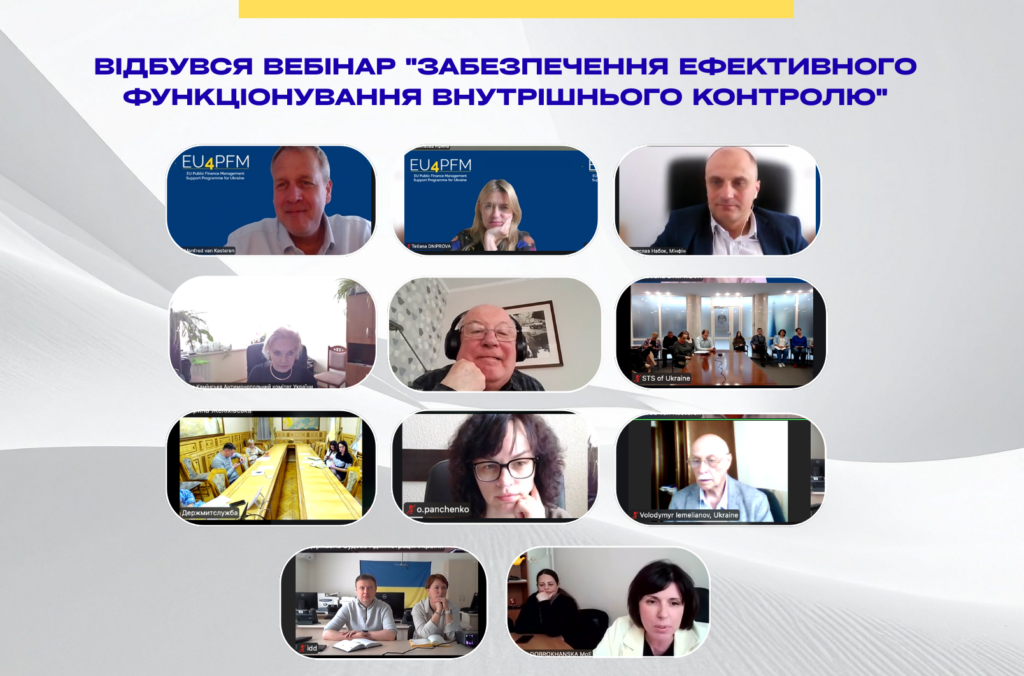
Ensuring effective functioning of internal control: EU4PFM and the Ministry of Finance host webinar for Ukrainian public sector officials
EU4PFM and the Ministry of Finance of Ukraine jointly conducted a two-day webinar series for internal auditors representatives of Ukrainian public institutions. The sessions brought together more than 110 participants, including management representatives, internal control coordinators, internal auditors, and representatives of strategic planning units and financial and economic departments from across the Ukrainian public sector.
The event was designed to deepen participants’ understanding of internal control principles and support their effective implementation in practice. The topic carries particular urgency: the state of internal control functioning has been identified as a baseline issue in the European Commission’s report on Chapter 32 “Financial Control” within the framework of Ukraine’s EU accession negotiations.
EU4PFM International Experts on Public Internal Financial Control delivered presentations, drawing on best practices from across the European Union.
On the first day, Manfred van Kesteren presented the implementation of European public administration principles, the SIGMA assessment criteria and the current state of the public administration system in Ukraine. The expert highlighted that:
- Decentralised managerial accountability is the cornerstone of an effective internal control system in the public sector.
- Internal control covers the full range of managerial responsibilities involved in planning, programming, budgeting, execution, accounting, controlling, reporting and monitoring.
- Internal audit serves as a periodic, independent assessment of the quality of the internal control system.
- Senior management bears ultimate responsibility for ensuring that governance, risk management, and control processes function effectively.
- The Three Lines model should exist in some form within every organisation, with each line having clearly defined roles and responsibilities.
On the second day, William Frazer explored the relationship between strategic planning, budgeting and risk management, as well as the role of financial and economic departments in ensuring the effectiveness of internal control. Key takeaways from his presentation included:
- The work of financial and economic units ensures the lawful, efficient, and transparent use of public resources; proactive risk management; and access to the information decision-makers need to deliver results.
- Effective internal control requires skilled financial professionals. Professionalisation is an essential condition for sustaining robust internal control systems.
- Modern public administration places emphasis on delegation and managerial accountability — an approach that strengthens ownership of internal control at all levels of an organisation.
- Strategic planning sets the direction of policy and defines the goals and outcomes the state seeks to achieve, while budgeting translates those priorities into action by allocating financial, human and capital resources across programmes and services.
The webinar series reinforced the importance of continued capacity-building in public finance management as Ukraine advances on its path toward European integration.