EU4PFM concludes study visit to Denmark: highlights from the Ministry of Education
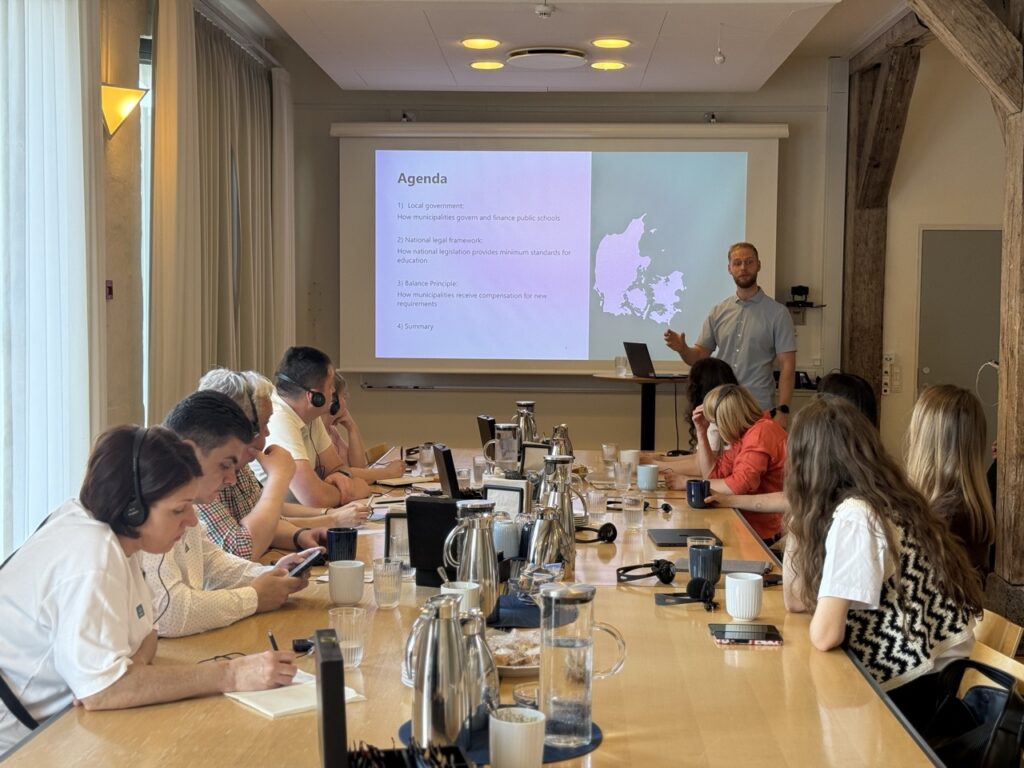
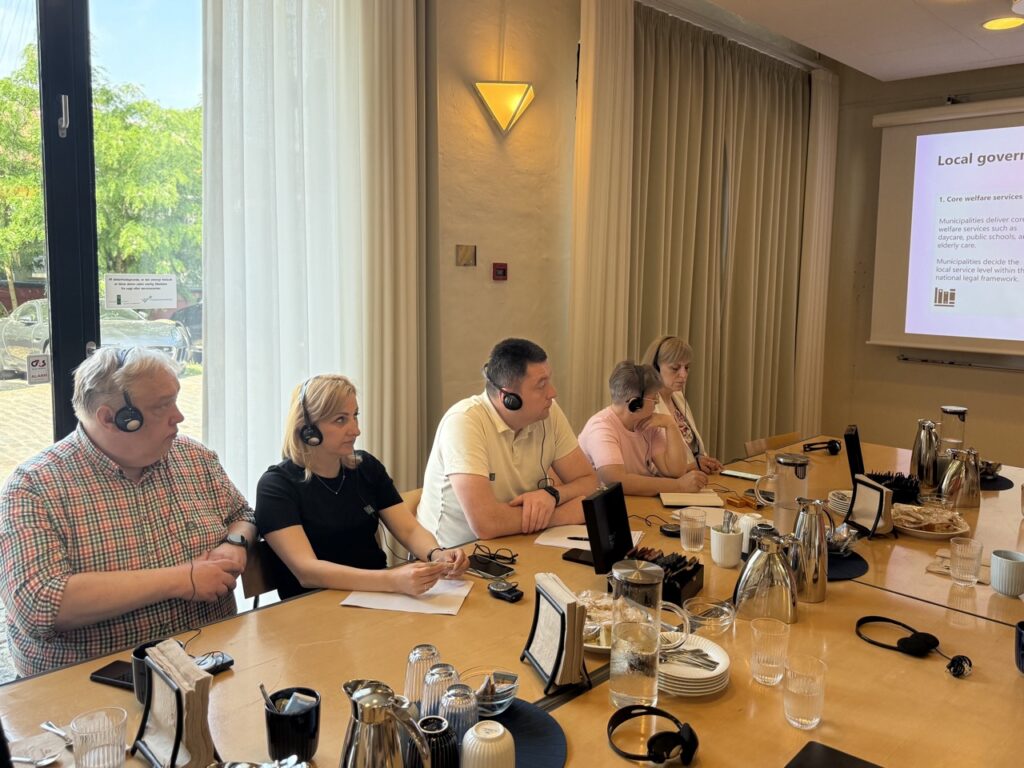
The third and final day of the study visit began at Denmark’s Ministry of Education, where the Ukrainian delegation explored two interconnected topics: the budget design for public schools and performance management in the education sector.
Denmark’s budget system is built around balancing two competing objectives – local autonomy and national regulation. Central to this balance is the principle that municipalities receive adequate funding to deliver core welfare services, including daycare, public schools, and elderly care. Within the national legal framework, municipalities retain the authority to determine their own service levels, set local taxes (including income and property taxes), and receive state grants, while the national government retains overall responsibility for fiscal policy.
Each year, the national government and Local Government Denmark, the body representing all 98 municipalities, negotiate a financial agreement that sets the parameters for the coming year. Education falls squarely within this framework: schooling is compulsory and free in Denmark, with national legislation establishing minimum standards such as class size limits and minimum teaching hours, while municipalities manage local organisation and implementation independently.
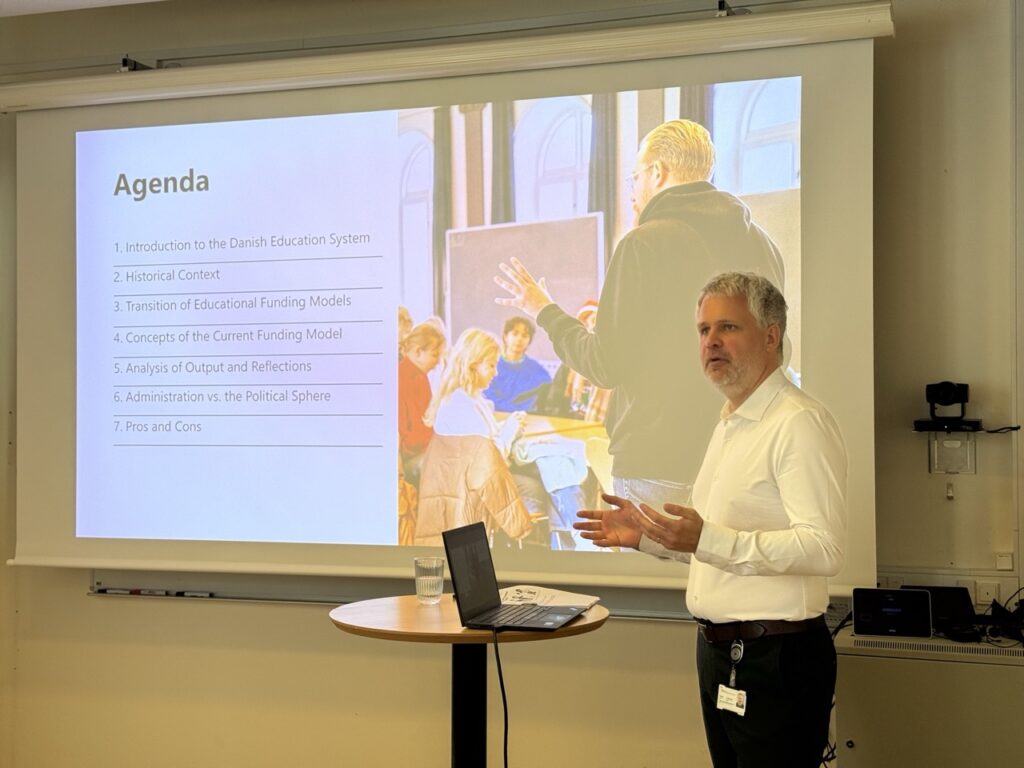
The second presentation turned to Denmark’s upper-secondary and vocational schools, which traced the evolution of educational funding models to their current form. Today, both school types share the same governance structure and funding model, defined by the principle of institutional semi-autonomy. Key features of this model include:
- School-level responsibility for financial and operational decisions
- Independent capital foundations, with liquidity management and full budget discretion held at school level
- Governance through goals and guidelines rather than centralised rules and regulations
- Statutory requirements for accounting, annual financial statements, board composition and proper use of administrative systems – hence the “semi” in semi-autonomous
- National oversight conducted by the Agency for Education on the basis of risk assessment and thematic priorities
This model reduces administrative overhead while creating measured market-based incentives, with schools competing to attract students. The result is a light-touch system that nonetheless maintains accountability through clearly defined statutory obligations.
The knowledge gained and experience exchanged during the visit provided valuable insight for Ukraine’s delegates from the Ministries of Education and Finance. Denmark, widely recognised for its mature and well-functioning public finance management system, offered a compelling model for public finance management reform.